
The Vegetation Management Execution Gap: Translating Risk Data into Field Action

Post by
Tom Janes
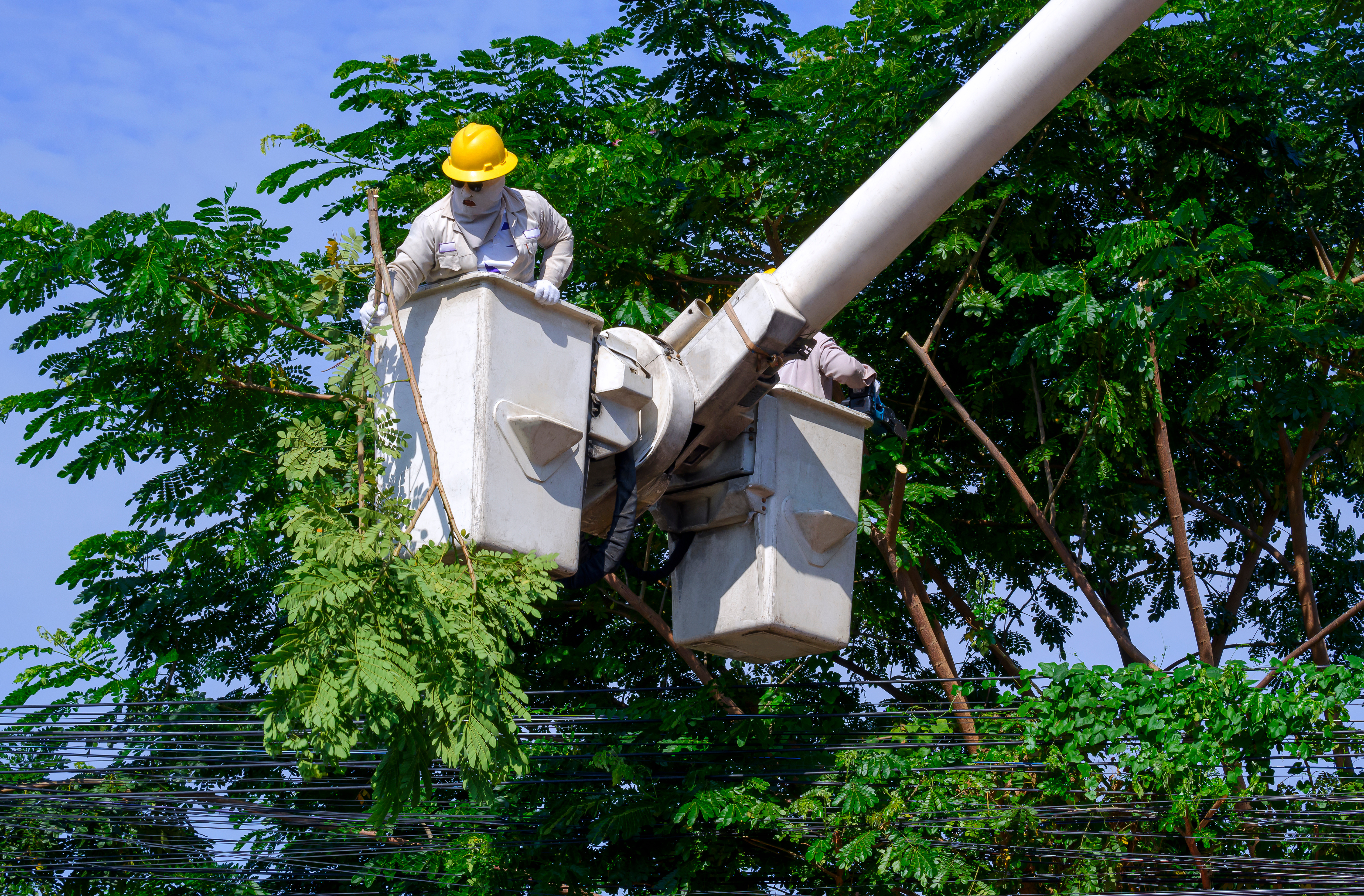
Vegetation management is the single largest operating expense most electric utilities carry. The industry spends between $6 billion and $8 billion a year managing right-of-ways, and for many utilities, it accounts for up to 75% of their overhead distribution maintenance budget.
Fortunately, the technology for identifying vegetation risk has become remarkably advanced. Using LiDAR, satellite imagery, and AI-driven growth models, utilities can now see exactly which spans need attention and roughly when. We have effectively solved the detection problem.
But for many operations leaders, detection wins are only half the battle. The gap most utilities still struggle to close is in execution, specifically on the distribution side, where the volumes are highest, the contractor networks are vast, and every mile of right-of-way represents a complex coordination challenge.
When a satellite flags a high-risk segment on a Tuesday, that risk score needs to become a prioritized work order, a contractor dispatch, and a verified completion record by Friday. That operational sequence is where the real friction lies, and where intelligent workflow orchestration provides its greatest value.
The Distribution Execution Gap
Distribution vegetation management is fundamentally different from transmission. Transmission corridors are long, remote, and governed by strict compliance parameters that force procedural discipline. Distribution systems, by contrast, are sprawling and localized. A large utility might manage 50,000 to 100,000 miles of distribution lines spread across dozens of counties, entangled with customer property, municipal tree ordinances, and varying species mixes.
When a remote scan identifies a hazard on a distribution line, the operational reality is often fragmented. The risk data lives in the remote sensing platform. Work orders live in the enterprise asset management (EAM) system. Contractor assignments are tracked in spreadsheets. Crew completion reports come back through disparate mobile apps, emails, or even phone calls.
None of these systems naturally share a common workflow. As a result, the vegetation management team becomes a "human integration layer," pulling data from one screen, typing it into another, and manually chasing contractors for status updates.
Orchestrating the Workflow (without the IT burden)
Innovative utilities are closing this execution gap by rethinking their operational architecture. Rather than replacing their remote sensing tools or their legacy EAM systems, they are deploying a workflow orchestration layer to serve as the connective tissue.
For IT leaders, it is important to note that this does not mean forcing terabytes of massive LiDAR point clouds into a legacy SAP or Maximo environment. Instead, this uses an event-driven architecture. The orchestration layer extracts only the actionable metadata such as the risk score, the coordinates, and the asset ID to automatically trigger a workflow. It extends the life of legacy systems without overwhelming them.
This automated handoff drives two critical shifts in how vegetation management is executed in the field:
1. Balancing Risk with Contractor Density
Traditional distribution programs often rely on fixed calendar cycles, trimming every span on a multi-year rotation regardless of actual risk. Connecting an orchestration platform directly to remote sensing data flips this model, allowing each span to receive a dynamic risk score.
However, from an operational perspective, purely risk-based routing can inadvertently destroy contractor efficiency. Tree trimming crews make their margins on density, clearing mile after contiguous mile. If an algorithm tells a crew to clear three high-risk trees on one street, skip two miles, and clear five trees on another, "windshield time" skyrockets and unit costs explode.
A smart orchestration layer solves this by balancing risk with density. It doesn't just blindly send crews to isolated high-risk trees; it intelligently bundles high-priority spans with adjacent medium-risk work to create profitable, contiguous, and highly efficient work packages for the field.
2. Frictionless Contractor Dispatch
On the distribution side, a utility might utilize dozens of different vegetation management contractors. When a work package is generated, it routes automatically to the assigned contractor with the scope, exact geospatial location, and access requirements attached.
Crucially, this orchestration must respect the realities of field labor. Tree trimming crews are there to cut trees, not to perform complex data entry. Forcing dozens of subcontractors to adopt a heavy, complex new mobile app often leads to change management failure. Instead, the focus should be on friction reduction. By providing simple, offline-capable mobile forms or even SMS-based completions, crews can report their work faster than filling out paper sheets. The workflow immediately triggers a verification step (like a field photo or satellite re-scan) and updates the central operational system, helping contractors get their invoices approved and paid faster.
The Operational Payoff
When data flows continuously and execution becomes transparently trackable, the impact on grid reliability is profound. Achieving these metrics requires more than just good data; it requires flawless, realistic execution at scale. By replacing manual handoffs with intelligent, field-aware process orchestration, operations teams can finally translate advanced risk detection into rapid, reliable action.
Want to continue the discussion? Schedule a chat with Tom.