
RBMA SYNC '26 Key Takeaways
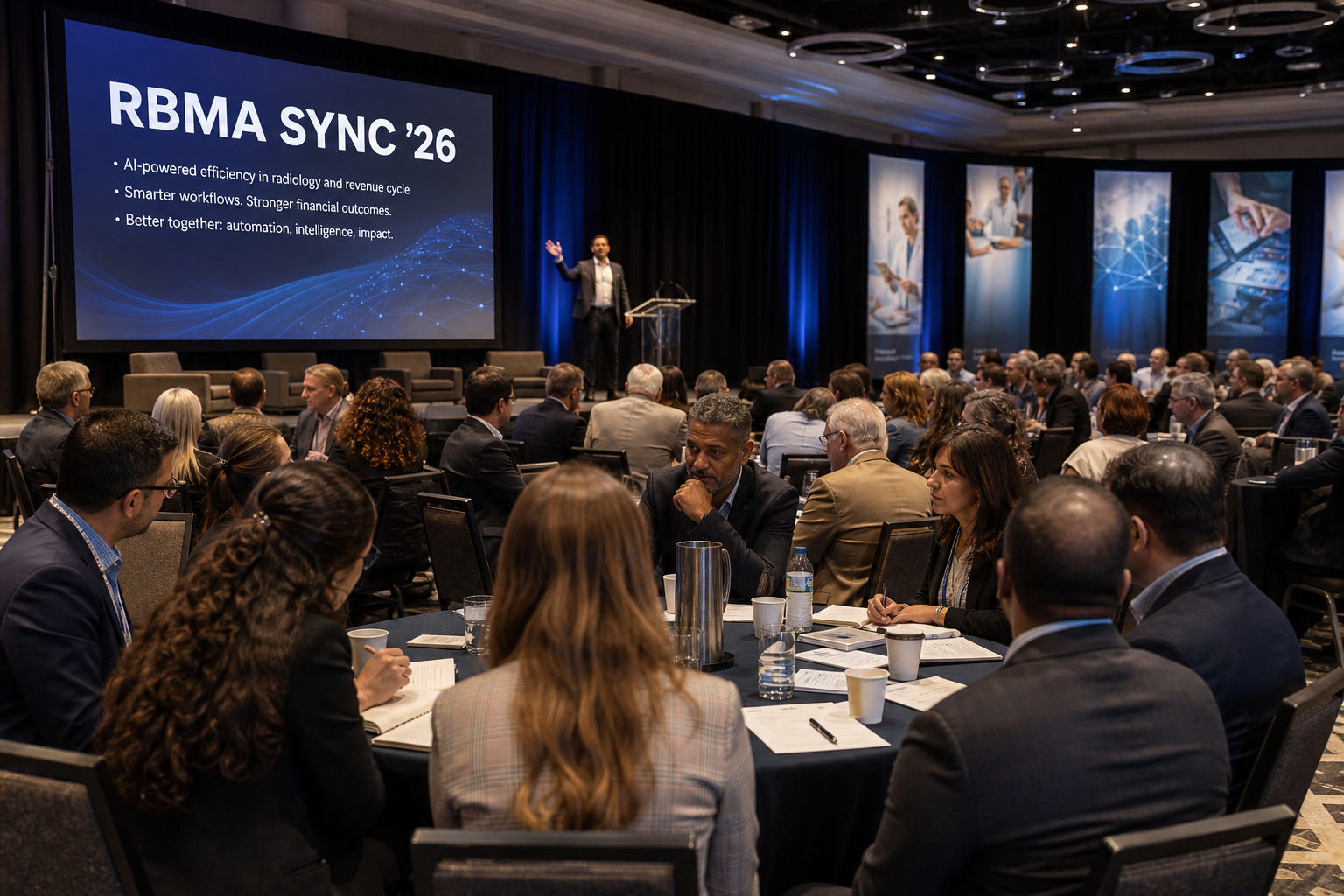
At RBMA SYNC '26, key discussions revolved around translating healthcare AI and capacity data into actionable revenue cycle operations. To maximize operational yield and protect margins, radiology leaders must focus on practical workflow changes, peak-capacity visibility, and leveraging automated tools for activities such as out-of-network Independent Dispute Resolution (IDR).
I spent October 5–6 in Charlotte at RBMA SYNC '26; here are my primary executive takeaways regarding operational levers, IDR strategies, and workflow optimization.
Radiology practices do not lack data or emerging technology; they lack clear executive decisions on structuring workflows and capturing missing yield. Leveraging automated tools, such as our No Surprises Act (NSA) Automation software, drives operational efficiency, eliminates leakage, and maintains compliance without increasing headcount.
"Show me the Tuesday"
The show began with an impactful keynote with practical advice: when evaluating new AI tools, demand to see "the Tuesday." What specific workflow step changes on an ordinary day? Focus on logistical deployment: inventory existing software, target a quick win, fix the workflow prior to automation, prepare staff, and establish clear governance metrics.
Avoid standard pilot pitfalls by defining explicit financial or operational failure criteria and hard exit dates before deployment. Keeping human oversight on key decisions ensures accountability while protecting margin and ROI.
Capacity problem or visibility problem?
In the next session, Jeff Mays asserted that rising read volumes (up 20–25%) and clinician attrition mean hiring alone cannot resolve capacity constraints. Many capacity issues are visibility problems hidden by overall averages, such as steady 82% utilization disguising extreme peak surges over 110%.
The examples he shared were modest and practical, which is what made them persuasive:
- One practice recovered more than three hours a week of physician time by shifting when certain demand arrived
- Another moved from three evening radiologists to two plus a part-time local reader, freeing a full position
- An overnight shift moved from 11pm to 7am to 8pm to 4am so coverage matched the actual demand curve
Pairing analytics directly with actionable operational rules (e.g., establishing clear stat queue threshold tiers for intervention and escalation) and aligning shift scheduling with actual demand curves rather than standard blocks helps recover clinician hours and optimize throughput.
Radiology wins IDR when it shows up
With annual CMS dispute volumes exceeding 5.6 million in 2025, Independent Dispute Resolution (IDR) represents a high-yield opportunity. Providers win ~85–90% of arbitrations, securing awards averaging five times the original Qualified Payment Amount (QPA).
Lower CMS administrative fees ($15/batch) and broader batching rules reduce barriers to entry. Payers challenge eligibility in 40% of cases but succeed in only 17%.
Unfortunately, radiology has largely not been participating, and is missing out on significant revenue. This speaker’s recommendations included: audit out-of-network leakage and begin participating in the No Surprises Act.
Bring arbitration operations in-house using dedicated software like Macedon's No Surprises Act Automation. Automating tasking, from eligibility verification to IDRE selection, captures 100% of award revenue, avoids third-party commission fees, and prevents default losses from missed deadlines.
Practical next steps
High-performing organizations focus on clear decision-making, honest measurement, and workflow execution. As a practical outcome of RBMA Sync sessions, bring these strategic questions to your executive team:
- For each AI tool or pilot we're running, can we describe the Tuesday? Do we have written exit criteria and a decision date?
- Where are we looking at averages when we should be looking at peaks? What decision rule would we follow if a queue crossed a threshold?
- Are we treating IDR and out-of-network disputes as a strategic revenue opportunity, or are we leaving significant margin on the table due to workflow gaps?
- Who on our team is playing the translator role between clinical, operational, and financial priorities?
Want to continue the discussion? Let's Talk